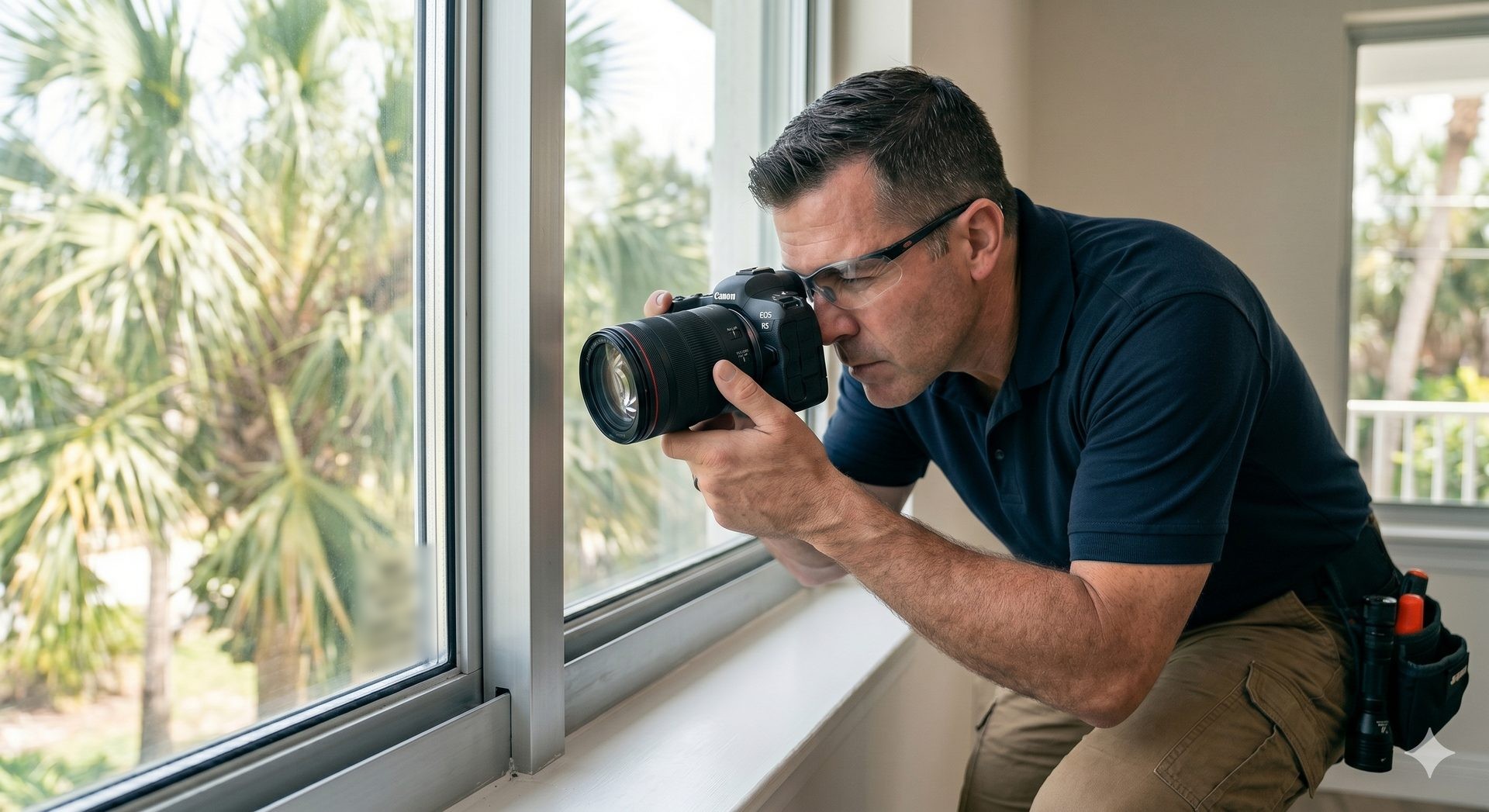

Wind Mitigation Verification Inspection — OIR-B1-1802 (6-Hour)
Master the Florida Wind Mitigation Inspection Form (4/2026) and position yourself as the expert inspectors trust for hurricane-resistant property assessments. This 6-hour CE course breaks down every section of the form, from building code classifications to FORTIFIED upgrades, so you'll complete inspections with confidence and accuracy.
Home inspectors: who can sign the wind mitigation form (OIR-B1-1802)?
Florida law (s. 627.711(2)(a)1, F.S.) lets a licensed home inspector sign the form only after completing, once, at least 3 hours of hurricane mitigation training approved by the Construction Industry Licensing Board (CILB) that includes a proficiency exam.
This course is continuing education. It counts toward the 2 hours of hurricane mitigation CE every home inspector needs each renewal (s. 468.8316, F.S.), but it does not by itself qualify you to sign the form.
Licensed general, building and residential contractors, engineers, architects and certified building code inspectors sign the form under their own licences.
About This Course
The Florida Wind Mitigation Inspection Form (OIR-B1-1802) is the statewide standard for documenting a property's resistance to wind damage, and insurers, agents, and homeowners rely on inspectors who know it thoroughly. This course is a comprehensive, question-by-question walkthrough of the current form — you'll learn not just what to document but why each element affects a property's wind performance and insurance rating. You'll work through the governing statutes and code (Sections 627.711 and 553.844, Florida Statutes, and the Florida Building Code), the owner-information intake, and the technical detail behind roof covering, roof-deck and roof-to-wall attachment, roof geometry, secondary water resistance, and opening protection. By the end you'll be equipped to classify qualifying construction and upgrades, explain FORTIFIED designations, photograph and document each finding to carrier standards, and deliver inspections that give your clients real clarity on their property's wind performance.
Florida contractors — CILB continuing education: the wind-mitigation methodology in this 6-hour course aligns with the Construction Industry Licensing Board (CILB) wind-mitigation CE category (FAC 61G4-18.001(3)(f); Section 553.844(2)(b)1.–5., F.S.). All Inspections 4U Academy, LLC is an approved CILB continuing-education provider (Provider #PVD1716). CILB approved this course for 6 hours of CILB continuing education, online only: Course #0615615 (course license CRS13984), approved August 18, 2026. The course remains fully approved DBPR Home Inspector CE under Chapter 61-30.
What You'll Learn
- Explain the statutory and regulatory framework governing Florida wind-mitigation verification — Sections 627.711 and 553.844, Florida Statutes, and the uniform OIR-B1-1802 form adopted under Rule 69O-170.0155, F.A.C. — including the inspector's signing authority and fraud liability.
- Classify the applicable Florida Building Code edition and the property's wind-borne-debris / design-wind region.
- Determine roof slope and identify the predominant roof covering, including the FBC or product-approval documentation each covering requires.
- Evaluate roof-deck attachment and roof-to-wall connection type to assess the building's structural load path.
- Assess roof geometry, secondary water resistance, and opening-protection ratings, including the impact and cyclic-pressure criteria that distinguish each protection level.
- Document each construction and mitigation attribute with compliant photographs and supporting records, and complete and sign the OIR-B1-1802 form with all required supplements.
- Distinguish standard construction from hurricane-resistant upgrades to advise clients on qualifying mitigation features and FORTIFIED designations.
Who This Is For
Prerequisites
Curriculum
An orientation to the course scope, objectives, and learning pathways for mastering wind mitigation verification inspection practice.
Understand the legal framework governing wind mitigation inspections in Florida, your signing authority limits, fraud liability exposure, and compliance responsibilities when certifying the OIR-B1-1802 form.
Learn current Florida Building Code provisions and wind region classifications (Q1 and Q2) that determine whether a property qualifies for wind mitigation insurance credits.
Evaluate roof slope and roof covering materials and systems (Q3 and Q4) using visual inspection techniques and code-based standards to assess mitigation eligibility.
Identify proper roof deck attachment methods and fastening standards (Q5), including spacing, fastener type, and connection details that meet code requirements.
Assess roof-to-wall attachment systems and connections (Q6), determining whether bracing and fastening satisfy current code standards for wind resistance.
Evaluate roof geometry and secondary water resistance features (Q7 and Q8), including deck-to-wall connections and backup water protection mechanisms.
Assess opening protection for windows, doors, and other building penetrations (Q9), evaluating impact-resistant glazing, shutters, and closure compliance.
Navigate High Velocity Hurricane Zone (HVHZ) inspection requirements and Miami-Dade Notice of Acceptance (NOA) standards that apply to properties in coastal zones.
Understand how insurance carriers evaluate wind mitigation claims, the consequences of incomplete or inaccurate reports, and common reasons for form rejection and claim denial.
Work through a complete property inspection from Q1 through Q9, applying all course concepts systematically to a real-world scenario and justifying every finding.
Recap key concepts, review critical compliance points, and reinforce the practical and legal standards for professional wind mitigation verification inspection work.
Lessons are narrated by an AI-generated voice reading the instructor’s written script — not a human recording.