Inspection Tools: Electrical, Plumbing, HVAC & Roof Covering
How to use inspection tools on the electrical system, plumbing system, HVAC system and roof covering: what Florida's standards of practice require you to inspect, which tools help, where each tool must stop, and how to reach each component safely. About two hours of instruction in six modules.
About This Course
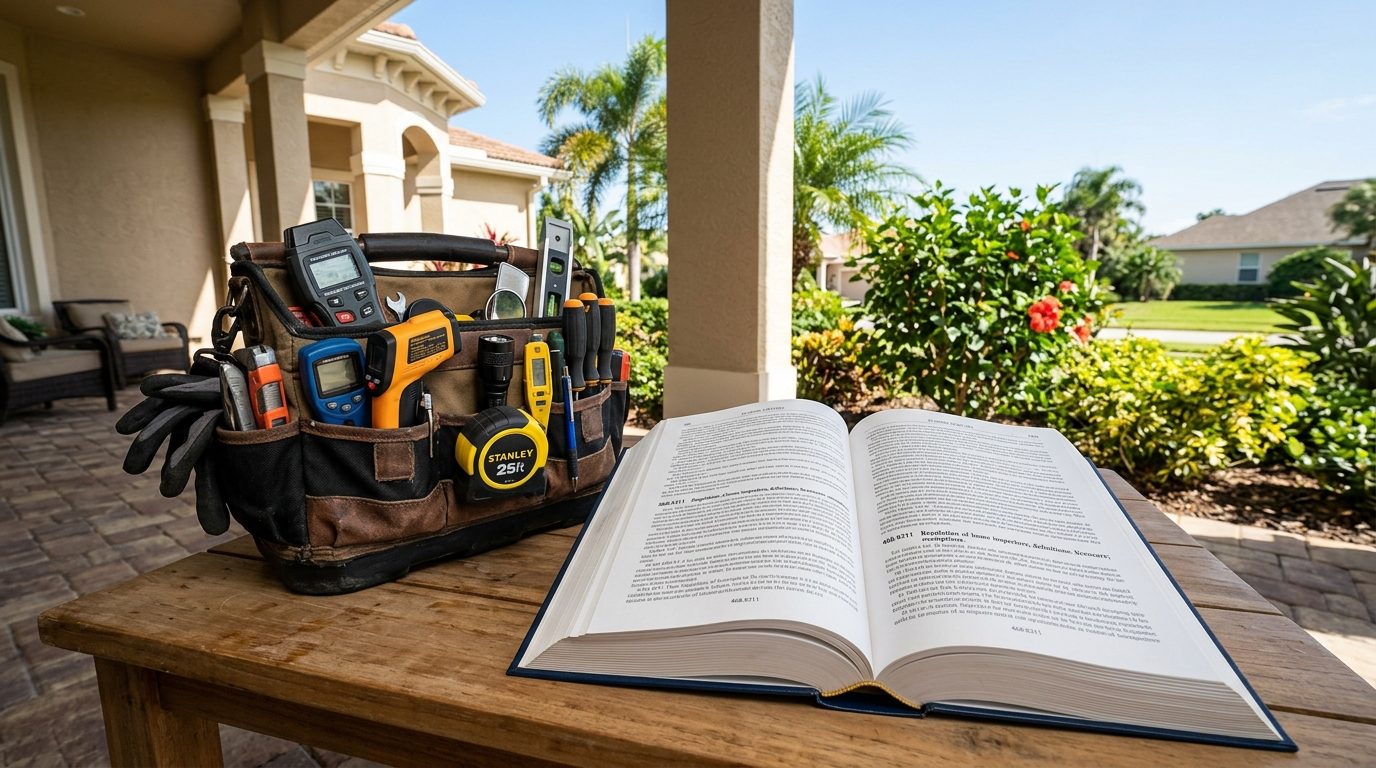
This course teaches Florida home inspectors how to use their inspection tools on the components of a home that the standards of practice name: the electrical system (Rule 61-30.803), the plumbing system (Rule 61-30.806), the HVAC system (Rule 61-30.804) and the roof covering (Rule 61-30.805), together with the structure (Rule 61-30.802) and site conditions that affect the structure (Rule 61-30.811). For each component you learn what the rule requires you to inspect, which tools help you do it (receptacle, GFCI and AFCI testers, non-contact voltage detectors, multimeters, pin and pinless moisture meters, thermal cameras, thermometers, combustible-gas and carbon-monoxide detectors, ladders and drones) and where the rule's own exclusions say a tool must stop. You also learn how to reach each component safely: ladder and personal-protective-equipment practice at the roof, in the attic and at the electrical panel, and the roof-walk and attic-entry exclusions in Rules 61-30.805(4) and 61-30.802(3). Each module closes with the report language the standards of practice expect: describe the observed condition, give a reason, and recommend correction, monitoring or further evaluation by the appropriately licensed professional. About two hours of instruction in six modules, each followed by a short knowledge check.
What You'll Learn
- Apply the limited-visual-examination definition of home inspection services in Section 468.8311(4), F.S., and the readily-accessible scope of Rule 61-30.801 to every tool used on the components of a home
- Inspect the structure under Rule 61-30.802, including probing suspected deterioration and the attic-entry exclusions in Rule 61-30.802(3), without rendering an engineering opinion
- Reach the roof covering, attic and electrical panel safely, using ladder and personal-protective-equipment practice and the roof-walk exclusions in Rule 61-30.805(4)
- Inspect the electrical system under Rule 61-30.803 with receptacle, GFCI/AFCI and non-contact voltage testers, within the rule's explicit tool exclusions
- Inspect the plumbing system under Rule 61-30.806, including the water-heater relief valve, and confirm suspected moisture with the two-step thermal-then-moisture-meter method
- Inspect the roof covering under Rule 61-30.805 and site conditions that affect the structure under Rule 61-30.811, using a drone only as a supplement to the ground and eave inspection
- Inspect the HVAC system under Rule 61-30.804 using the supply-and-return temperature differential and combustion-safety observation within the rule's scope
- Report each finding in standards-of-practice language: the observed condition, the reason, and a recommendation for correction, monitoring or further evaluation by a licensed professional
Who This Is For
Prerequisites
Curriculum
Get oriented to the course structure, learning outcomes, and how this training integrates into your professional practice.
Ground your tool use in Florida's Standards of Practice, understanding the regulatory framework that governs proper inspection methodology and documentation.
Learn essential safety protocols for ladder work, attic and roof access, and personal protective equipment to protect yourself and your clients during inspections.
Master the selection and proper use of electrical testing tools, including multimeters and circuit testers, to safely identify and document electrical defects.
Apply the two-step inspection rule to moisture detection, thermal imaging, and plumbing assessments, ensuring consistent, defensible findings across multiple building systems.
Evaluate roof condition assessment techniques, explore drone technology for enhanced documentation, and establish proper site closeout and evidence management procedures.
Operate HVAC diagnostic tools and perform combustion safety testing procedures to identify carbon monoxide risks and system deficiencies.
Consolidate your learning and reflect on how these tools and protocols strengthen your inspection practice and professional competency.
Lessons are narrated by an AI-generated voice reading the instructor’s written script — not a human recording.