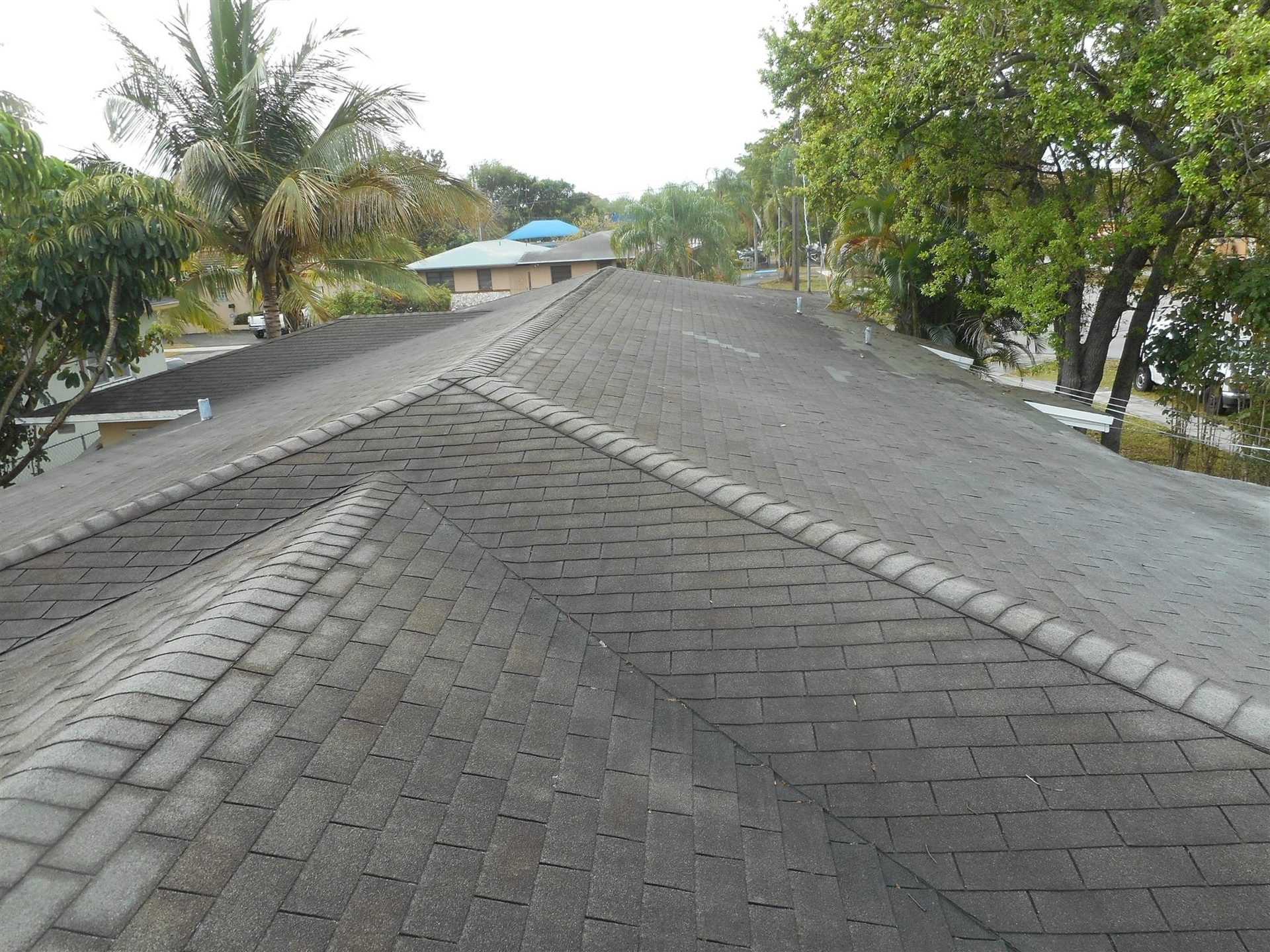

FL HI CE — Roof Covering (14-Hour)
Fourteen hours of deep, roof-specific training built around how Florida's sun, wind, and storms actually age asphalt, tile, metal, and low-slope coverings. Learn to read shingle degradation stages, decode flashing patch histories, evaluate ridge and off-ridge ventilation, and write findings that hold up in a report — not just check a box.
About This Course
This 14-hour course takes Florida's roof-covering standard and turns it into a field-ready skill set: what you're required to inspect, where you can draw a defensible line on scope, and how to turn what you see into a report finding that names the deficiency, explains why it matters, and recommends next steps. Every module is anchored in Florida's climate as the driving force behind roof failure — UV, wind, salt air, and driving rain age every covering type in recognizable patterns, and this course trains you to read those patterns instead of reacting to them.
You'll work through the major covering types one at a time: the four-stage aging sequence of asphalt shingles from granule loss to mechanical failure, tile roof conditions, metal panel systems including side-lap and end-lap vulnerabilities and the capillary action that defeats seemingly tight seams, and low-slope/flat assemblies. From there the course moves into the details that separate a thorough inspection from a superficial one — flashing archaeology (reading layered tar and mastic repairs as a system-level history rather than isolated caulk notes), skylights, chimneys and penetrations, drainage systems, and attic ventilation layout including ridge vents, off-ridge vents, and the intake/exhaust relationship that actually moves air.
Later modules sharpen judgment skills that are hard to teach from a code book alone: estimating roof age and remaining service life with a defensible basis, recognizing storm damage versus wear-and-tear, reading mismatched slopes and materials as evidence of prior repairs, and sequencing a field inspection so your eye covers the roof the same way it ages. The course closes with dedicated instruction on reporting the roof — writing findings that name the deficiency, its significance, and your recommendation, and stating system-level opinions plainly rather than burying them in a list of minor notes.
Built for Florida-licensed home inspectors who need their CE hours to actually sharpen their roof inspections, not just satisfy a requirement, this course pairs concrete field scenarios — Sarasota shingle wear, Gainesville lap leaks, Port Charlotte flashing patch histories, Ocala ventilation layout — with the reporting discipline DBPR expects to see in your work product. It is a 14-hour general continuing-education course.
What You'll Learn
- Identify the four-stage progression of asphalt shingle aging from granule thinning through mechanical failure and photograph each stage appropriately
- Explain how side laps and end laps fail on metal roof systems, including the role of capillary action and degraded sealant
- Recognize flashing systems sustained by repeated sealant patching and distinguish a system-level end-of-service-life opinion from an isolated defect
- Evaluate attic exhaust ventilation layout, including ridge vents and off-ridge vents, and identify installation errors such as vents installed over uncut decking
- Differentiate storm damage from ordinary wear when inspecting shingle, tile, metal, and low-slope coverings
- Apply a defensible, evidence-based method for estimating roof age and remaining service life, including assessing mismatched slopes on separate timelines
- Demonstrate a field inspection sequence for roof coverings that moves from whole-field scanning to close-in verification at vulnerable areas
- Construct report findings that name the deficiency, explain its significance, and state a clear recommendation, including system-level statements where warranted
Who This Is For
Prerequisites
Curriculum
Introduces the course's three organizing themes: inspection scope discipline, Florida climate as the primary driver of roof defects, and the reporting standard of naming a deficiency, its significance, and a recommendation.
Covers what the roof inspection standard requires an inspector to examine, where legitimate limits on scope exist, and how to document what was and was not inspected.
Presents practical methods and sequencing for conducting a roof inspection, including how to move from a broad visual scan to close-in verification of suspect areas.
Teaches the four-stage aging sequence of asphalt shingles — granule loss, exposure, embrittlement, and mechanical failure — and how to document each stage as a basis for service-life opinions.
Covers inspection of tile roof coverings, including common tile-specific conditions and how to evaluate and document their condition.
Explains metal panel systems, including side-lap and end-lap joint types, the capillary action that undermines tight seams, and how sealant degradation shows up as leaks and rust tracking.
Addresses inspection of low-slope and flat roof assemblies and the conditions that distinguish them from sloped coverings.
Teaches how to read layered sealant and mastic repairs at valley seams, step flashing, and counter-flashing as a system-level history, and how to distinguish an isolated defect from a flashing system at end of function.
Covers inspection of skylights, chimneys, and other roof penetrations, including how their flashing is evaluated using the same joint-reading skills applied elsewhere on the roof.
Covers evaluation of roof drainage components and how drainage condition relates to overall roof performance.
Explains attic intake and exhaust ventilation, including ridge vents, off-ridge vents, and how vent position and layout indicate which parts of an attic actually move air; also covers insulation observations.
Presents a method for forming a defensible opinion on roof age and remaining service life, including assessing mismatched or replaced slopes on separate age timelines.
Teaches how to recognize storm damage patterns on various roof coverings and distinguish them from ordinary wear and prior repairs.
Walks through applying the course's inspection sequence and documentation practices under real field conditions across covering types.
Focuses on writing roof findings that name the deficiency, explain its significance, and state a clear recommendation, including when a system-level opinion is warranted over a list of minor notes.
Reviews the course's key inspection and reporting principles and reinforces how they apply across all roof covering types.
Lessons are narrated by an AI-generated voice reading the instructor’s written script — not a human recording.