FL HI CE — Electrical System (18-Hour)
A deep, 18-hour walk through the electrical system as Florida law defines it for home inspectors — from the service riser and meter base to panel interiors, GFCI/AFCI protection, and the write-up that holds up under a client's scrutiny. Built around real Florida field conditions: hurricane-damaged risers, legacy wiring in older housing stock, and the readily-accessible rule that decides whether you open that panel cover at all.
About This Course
This course takes licensed Florida home inspectors through the electrical system component by component, the same way you encounter it on an actual inspection: starting at the service entrance, moving through the meter base and riser, into the main panel and sub panels, and out to receptacles, switches, and life-safety devices. Rather than treating electrical as an abstract code topic, the material stays anchored to what you can actually see and describe in the field — insulation that's cracked or chalky from attic heat cycling, splices left exposed outside a junction box, a weatherhead knocked out of plumb by wind, or a meter base pulled away from its wall after a storm. Along the way, you'll work through the specific reasoning Florida's rules provide for handling a stuck or painted-shut panel cover, and how the definition of 'readily accessible' governs what you're expected to open and what you're not.
A significant portion of the course is built around Florida's own housing stock and climate: legacy wiring methods still found in older homes, three-prong versus four-prong dryer and range receptacles, twist-lock configurations on generator circuits, and the storm-driven deterioration patterns that show up differently at a coastal property than an inland one. You'll also work through GFCI and AFCI protection, smoke and carbon monoxide detector expectations, and the common defects that turn up repeatedly across Florida homes of varying ages.
Throughout, the course keeps circling back to a central professional discipline: describing what you observe — type, location, and significant characteristics — clearly enough that a client reading your report understands exactly what was found and where, without drifting into repair recommendations or code-compliance language that exceeds the scope of a home inspection. That distinction between an observation and an opinion, and between an opinion and a code call, is reinforced module after module, using real panel, receptacle, and service-entrance scenarios rather than abstract rule recitation.
By the end of the 18 hours, you'll have a systematic field approach to the electrical system from the ground up — literally, starting underground at the lateral and riser — paired with the reporting judgment to write findings that are specific, defensible, and useful to the person reading them. It is an 18-hour general continuing-education course.
What You'll Learn
- Identify the readily-accessible criteria that determine when a main or sub panel cover should be removed during an inspection
- Describe service entrance components — including the riser, weatherhead, and meter base — using observed condition and location rather than assumptions about what lies beneath
- Distinguish standard 120-volt receptacles from specialty 240-volt configurations such as dryer, range, and twist-lock outlets, and describe each appropriately without misapplying a plug-in tester
- Recognize common signs of conductor and insulation deterioration, including damage from attic heat cycling and improper splices made outside an enclosure
- Explain how storm and flood exposure present differently at exterior service equipment versus interior panels, and document repaired versus unremediated damage distinctly
- Apply consistent panel-interior inspection procedures to main service panels and sub panels, covering bus bars, breakers, terminations, and labeling
- Evaluate GFCI and AFCI protection and smoke/carbon monoxide detector conditions against what is visually observable in the field
- Produce electrical inspection report language that states type, location, and significant characteristics without overstepping into code-compliance or repair-cost determinations
Who This Is For
Prerequisites
Curriculum
Orients students to the course structure and the professional-opinion framework that shapes every finding covered in the hours ahead.
Establishes the boundaries of the electrical inspection as a limited, visual review of readily accessible components, and introduces the definition inspectors will apply to every panel and device covered later.
Covers the core electrical concepts inspectors need as working vocabulary, giving non-electricians a practical foundation for describing what they observe.
Walks through the service entrance from the point conductors enter the property, including how underground laterals rise through protective conduit and what condition issues to look for at that transition.
Examines the main service equipment and how its rating is identified and documented during a field inspection.
Details how grounding and bonding at the service are observed and described, including common installation and condition issues found in Florida homes.
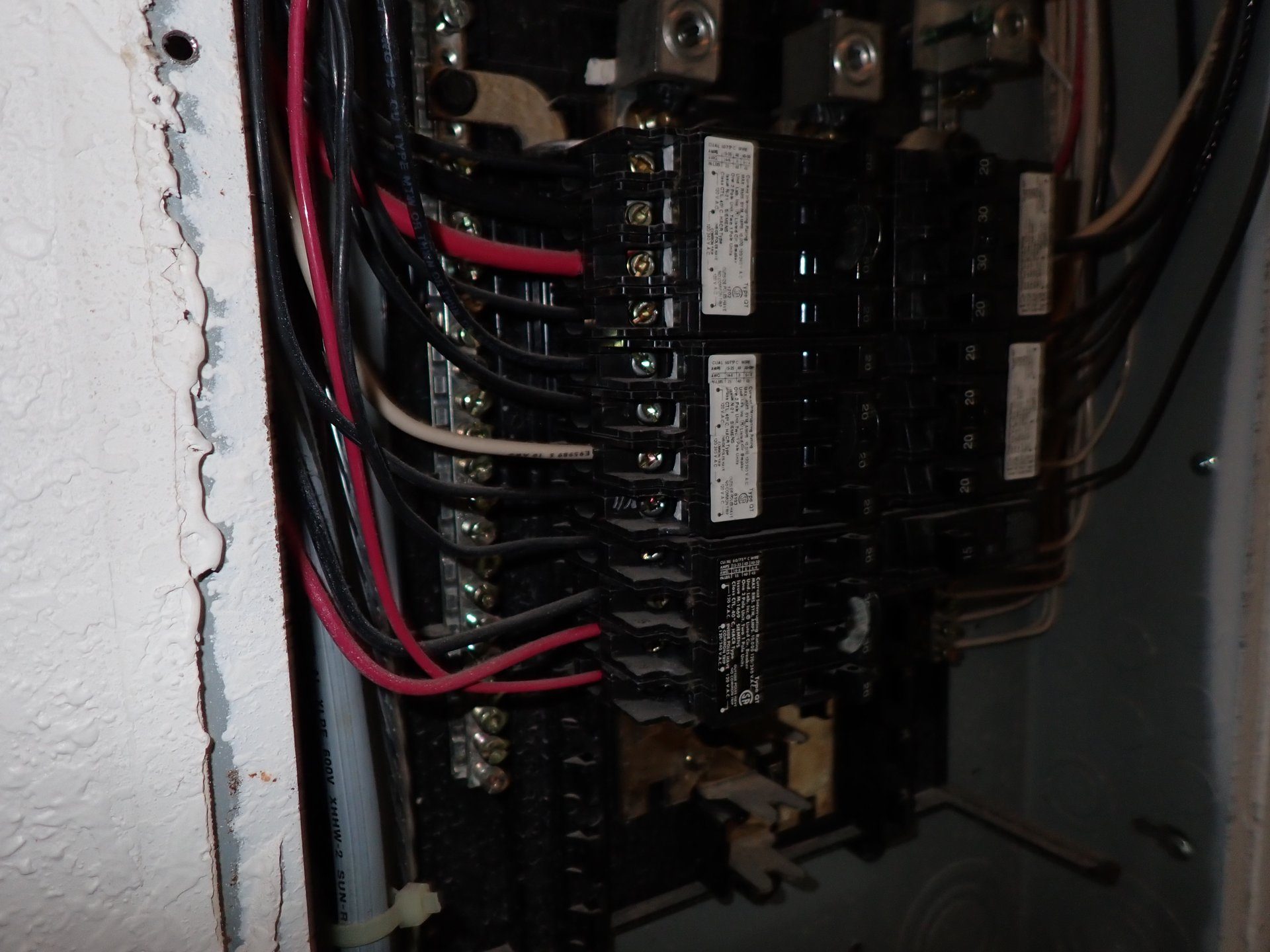
Guides inspectors through what becomes visible once a main panel cover is properly removed, including the bus, breakers, terminations, and labeling, and the accessibility rule that governs when to open the cover at all.
Applies the same interior-inspection vocabulary from the main panel module to sub panels, highlighting differences inspectors encounter in a secondary panel setting.
Covers how to inspect conductors and wiring methods along their visible length, including how to recognize damaged insulation and improper splices found outside proper enclosures.
Focuses on older wiring methods still present in Florida's aging housing stock, including knob-and-tube and other legacy systems, and how to describe their condition accurately.
Reviews breakers, fuses, and other overcurrent protection devices and the significant characteristics inspectors should note about their condition and installation.
Details how to identify and describe standard and specialty receptacles, switches, and lighting fixtures, including three-prong versus four-prong dryer and range outlets and twist-lock configurations.
Explains how GFCI and AFCI protection is identified in the field and what to document when testing or observing these devices.
Covers what inspectors look for regarding smoke detector and carbon monoxide detector presence and condition during a residential inspection.
Surveys recurring electrical defects found across Florida homes, including storm-related deterioration at exterior equipment such as weatherheads and meter bases.
Brings the prior modules together into a practical field workflow for inspecting an electrical system from service entrance to interior devices.
Focuses on writing electrical findings clearly, covering how to describe type, location, and significant characteristics so a client understands exactly what was found.
Closes the course with a review of key concepts and reinforces how the material connects back to a defensible, professional electrical inspection.
Lessons are narrated by an AI-generated voice reading the instructor’s written script — not a human recording.